


Before you make yet another New Year's resolution to lose weight for good, now might be a good time to ask yourself Dr. Phil's quintessential question: "How's that working for you?" Better yet, honestly ask yourself: "Why do you keep resolving the same thing year after year after year when it's clearly not working for you?"
For a refreshing new view of that tired old tradition, I consulted an unusual pair of therapists specializing in eating issues: Judith Matz and Ellen Frankel. Why interview Matz and Frankel when I could have happily blogged about the trouble with diet resolutions myself?
For one thing, there's experience, hope and strength in numbers. With over 20 years of clinical experience under their respective belts, these like-minded sisters -- yes, they're sisters -- are exceptionally wise and compassionate. What's more, the two books they've coauthored -- "The Diet Survivor's Handbook" and "Beyond a Shadow of a Diet" -- are nothing short of inspirational.
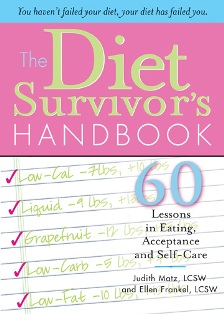
What follows are questions and answers from our recent conference call. This interview concludes the four-part holiday series on all things compassionate.
Q. What's your view of resolutions, especially weight-loss resolutions?
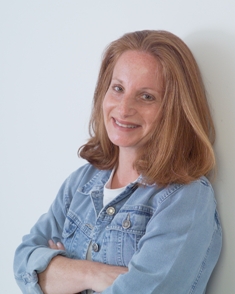
Frankel: The only resolution worth making is not to make a New Year's resolution. We know that diets don't work. That people who lose weight are going to regain the weight, often plus some. So we set ourselves up by saying: "This year, I'm going to be a better person by losing weight." Instead of making resolutions, a better way to go is, every day, cultivate healthy practices in your life that enhance your overall being physically, emotionally and spiritually.
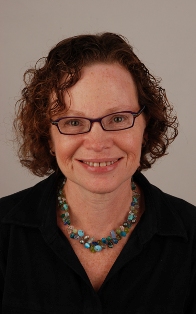
Matz: I agree, although if people want to make a resolution not to diet in the New Year, that's OK with me. Making a resolution to diet is the worst thing you can do if you want to end overeating. The mere thought of saying "I resolve to diet January 1st" is enough to set you up for overeating from now until the beginning of the New Year.
Q. Why do you think so many dieters break resolutions so soon after making them?
Frankel: It's inevitable. Jude and I always say: "People don't fail diets, diets fail people." Every diet failure is actually a success in terms of species' survival. Our bodies don't know we're dieting because that's what's in vogue right now. What we think of as failure on our part is actually our body ensuring our survival.
Matz: When the diet doesn't work, and people find themselves overeating, the blame is placed at the doorstep of the dieter. Our concern is that dieters feel they've done something wrong. That they think: "I'm weak." "I don't have will power." We want people to understand that, when you see it [rebound overeating] happening to almost everybody, it should no longer be seen as an individual weakness or fault.
Q. What's the cumulative effect of failing to keep resolutions year after year after year?
Frankel: When people look back at the great expectations they have when they initially start their diet, and then the great fall after that, the cumulative effect is lowered self-esteem, more depression and a greater risk for eating disorders.
Matz: I might say it slightly differently: the cumulative effect is shame. [When people keep trying and failing to stick to a diet, they wonder:] "What's the matter with me?" It becomes almost a moral issue. Also, many people postpone life [until after they lose weight.] Focusing on dieting derails them from looking deeper into their lives to what's really important. One last effect: The more people diet, the heavier they get over time. Their bodies get more efficient at storing fat. [That old saying is true:] The best way to gain weight is to go on a diet.
Q. Instead of making resolutions each year, I recommend practicing self-compassion every day. In small, significant ways, making sure to treat yourself like a friend or a loved one. What do you recommend?
Frankel: Yes, definitely practicing compassion in the way we take care of ourselves, in the way we feed ourselves, in the way we talk to ourselves. People who diet say such painful things to themselves. They're so preoccupied with what they've eaten today and what they'll weigh tomorrow, that there isn't time for loving themselves or the people around them.
Matz: Happiness and health are much broader than the number on the scale. My broadest suggestion: practice good self-care. I would really encourage people to learn attuned-intuitive eating. That's learning, day by day, to honor your internal cues for physical hunger and satiation. Also, moving your body in a way that feels comfortable, maybe even joyful. Managing rest through meditation and good sleep patterns. All these kinds of sustainable self-care practices lead to better health and happiness than dieting, which creates a harsh internal dialogue, negative feelings and so much distress.
Q. I can't help but wonder if you ever make resolutions or uphold any year-end health-affirming traditions?
Frankel: While I haven't set New Year's resolutions for years and years, periodically I take stock of where things are and where I'd like things to go. Sometimes it's New Year's, a birthday or another milestone. It's not like "now I have to start something new." It's more that "now I want to continue in this direction."
Matz: Ditto for me. For many, many years, I've resolved never to make a New Year's resolution again. I've kept that one!
Q. When it comes to eating, my two sisters and I don't exactly see eye to eye. But you two, you're remarkably agreeable. Why do you think that is?
Frankel: Jude and I had our own paths into this work. There was a time professionally when we were exploring different ways of working with eating issues. Both of us, in our own ways, came to the notion that when we practiced trusting our bodies -- when to eat, what to eat, when to stop -- we were both able to let go of the external pressures of dieting. We've been able to share that with clients.
Matz: I might add: We were both raised to be attuned eaters by a mother who didn't diet. Then the culture intervened. For different reasons, we got stuck with eating issues, and we had to work our way through them. Back in the '80s, I worked for the Optifast program. If anyone who works in the weight-loss industry is honest, they see very motivated people spend a lot of time and energy [on weight loss]. Talk about willpower! For three months, people are drinking awful-tasting shakes. How much more willpower can you have? And yet, ultimately, they gained it back. If you're honest, you have to question where the problem is.
Q. Is there a topic that reliably sparks disagreement between you two?
Frankel: Not really. Maybe when we were younger.
Matz: We live what we write about; we're both open, compassionate. Not that there's never conflict, but we're pretty good at agreeing to disagree. We know each other well. We enjoy each other's strengths, and we accept each other's vulnerabilities most of the time. We consider ourselves incredibly lucky.
Q. Are there more sisterly collaborations in your future?
Frankel: Jude's pretty focused on doing clinical work and presenting at conferences. I'm focused on helping to bring [my novel] "Syd Arthur" out in the world more. Syd is like most American women -- she repeatedly resolves to lose weight. On her journey, she discovers that happiness isn't found by a magic number on a bathroom scale. Instead, waking up to her own inner bliss, she discovers a sweetness that rivals a Godiva truffle.
Matz: If we had more time, yes, because we had the best time writing. I was diagnosed with breast cancer while writing "The Diet Survivor's Handbook." Writing that book was really a lifeline for me. We would be on the phone every Monday and Friday morning for three hours. [The writing and the biweekly phone calls with my sister] were an incredible support on that journey.
Ellen Frankel photo by Stuart Garfinkel
Judith Matz photo by Mark Chamberlain
Jean Fain is a Harvard Medical School-affiliated psychotherapist specializing in eating issues, and the author of "The Self-Compassion Diet." For more information, see www.jeanfain.com. Got comments on any of the above? Share your two cents in the Comments section.

5 New Year's Resolutions For Relationships, From Dr. Laura Berman

New Year's Resolution Recipes: How To Eat More Whole Grains

New Year's Resolutions 2012: Popular And Unusual Goals For Next Year

Rev. James Martin, S.J.: 12 Really Stupid Things I Never Want To Do Again


| therickashley This is the first year I can remember where I didn't make a New Year's resolution. Can't break it if you don't make it. 1 minute ago from web | ||

| Ruth_A_Buzzi For my New Year's resolution I started a new diet! So far, I've lost a total of 15 days. | ||

| Brotips_HQ #1484. Avoid the gym in January, bro. It’s still full of New Year’s resolution people. (Chill, it’ll be empty again in February.) #brotips 4 days ago from Tweue | ||

| TheLeARobinson My new year's resolution is to stop trying to make everyone happy.. might think its selfish but sometimes you gotta put urself 1st. 16 hours ago from web | ||
| therickashley This is the first year I can remember where I didn't make a New Year's resolution. Can't break it if you don't make it. | ||

| EvolutionSean Can you drink wine and still keep those New Year's Resolutions? You sure can! http://t.co/YZvh4A5S 1 minute ago from HootSuite | ||

| MNMOmag Don't shelve your New Year's resolutions: We're one of America's more literate cities—read with us! http://t.co/bWTEiiqw #MNJourneys 1 minute ago from HootSuite | ||

| VampieGirl @PerrieLittleMix did you have any New Year's Resolution? what was it? can u follow me pls?:)) xxxx #askperrielittlemix 1 minute ago from web | ||

| AlcStickCookies RT @WholeFoods: From our friends @HumaneSociety: The top five reasons to make #MeatlessMonday your New Year's diet resolution: http://t.co/11tXmRU4 2 minutes ago from CoTweet | ||

| MBVfreak MY NEW YEAR'S RESOLUTION IS TO REACH 1k FOLLOWERS!!!! LOL JK. -.-' 2 minutes ago from web | ||

| Au79TeaHouse So it's about 2 weeks since you've all made your new year's resolution, have you been on track with them or have... http://t.co/aWlOhQgo 2 minutes ago from Facebook | ||

| GatesofPower By the end of January all of the “New Year’s Resolution Energy” is gone and life feels somewhat grey
http://t.co/Kmx0jpUs
#brokenresolutions 3 minutes ago from Twuffer | ||

| pztweetz My first New Year's resolution: not to read any online article with "may", "might", "could" or "possibly" in the title. Waste of time. 4 minutes ago from web | ||

| EmelynPearl My New Year's Travel Resolution is to do more touristy things around the Orlando area! 5 minutes ago from web | ||

| yb2012 New Year's Resolution http://t.co/Ydg5z2BJ via @meganberry 5 minutes ago from Seesmic | ||

| RoseLovesJDB My new year's resolution is to hav more self confidence n speak my mind when needed 5 minutes ago from Mobile Web | ||

| TheManeSource New Year's Resolution: Keep it or Kicked it to the Curb? http://t.co/CFghpOQY 6 minutes ago from HootSuite | ||

| BreeUnique New Year's Resolution: Keep it or Kicked it to the Curb? http://t.co/SO4oBtn6 6 minutes ago from HootSuite | ||

| HerbalMagic Start your New Year’s resolution with Herbal Magic. http://t.co/Yiu1NqCq Get $10 for every pound you lose! #weightloss 6 minutes ago from HootSuite | ||
Make it Your New Year's Resolution to Care for 71% of Our Planet | Care2 Causes
Sam Harris: A New Year's Resolution for the Rich
Top Ten New Year's Resolutions
Popular New Year's Resolutions | USA.gov
How to Achieve Your New Years Resolutions - Fun Facts and Figures




 Loading comments…







Previewing Your Comment.
This comment has not yet been postedwww.kipubl
www.kipubl
amazon.com
Many celebritie
I lost 140 lbs. permanentl
I'm also in total agreement that first, we need to love ourselves no matter what, even if we come up short in some ways (or overweight or unable to follow through on things.) We need to love ourselves unconditio
William Anderson, LMHC
Author of 'The Anderson Method - Secrets of Permanent Weight Loss'
www.TheAnd
Warmly, Dr. Deah Schwartz, leftoverst
As always, thank YOU for chiming in!
Jean
People say I look 20 years younger. I know I feel it!
I too started a paleo-type way of eating this past year. It began in may when I decided that a traditiona
Best wishes!
It works for me.