
How To Buy the Greenest BeansShould I get dry bags or the canned kind?
Updated Tuesday, June 16, 2009, at 10:30 AM ET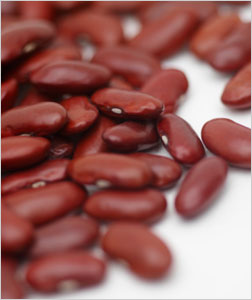 Now that it's picnic season, I'm back to making my famous three-bean salad. But every time I'm at the grocery store, I feel torn between the canned kidney beans and the dried ones in bags. Transporting the canned ones must produce more emissions, since they're heavier, but how does that compare with the carbon footprint of boiling dried beans for hours on a stovetop?
Up until the point when you pick them off the shelf, there's no question: Dried, bagged beans are going to be greener than the canned variety. The real X factor here is what you plan on doing with those beans once you get them home.
 PRINT
PRINT DISCUSS
 E-MAIL
 RSS
RSS RECOMMEND...
 Facebook
 MySpace
 Mixx
Mixx Digg
Digg Reddit
 del.icio.us
 Furl
Furl Ma.gnolia
 Sphere
 StumbleUpon
Whether they're sold in a bag or a can, beans that are meant to be eaten in seed form—such as kidney, black, or pinto beans—are initially processed the same way. Mature bean plants are cut down near their roots and left to dry in the fields. Then the dried seeds are threshed out and sent to a processor, where they're washed, milled, polished, and packed into bulk bags.
At this point, beans destined to be sold dry are simply decanted into smaller, shelf-ready bags. Canned beans, on the other hand, go through several additional steps of processing. First, they have to be hydrated, which either happens with a long, room-temperature soak or a relatively brief, hot bath. (The latter requires more energy but is often preferred because it cuts down on time and labor and helps prevent bacterial growth.) Then the beans are blanched for a few minutes before being sealed in cans and then cooked and sterilized in a retort—a machine that's essentially a big, steam-powered pressure cooker.
According to an analysis done at one Oregon processing facility (PDF), canning 10.5 ounces of green beans—the amount you'd find in a typical grocery store can, after draining out the water—requires roughly 1,500 British thermal units of natural gas. (That's about as much energy as it takes to drive a car one-quarter of a mile.) Since kidneys and pintos are tougher and take longer to cook—about 75 percent longer than green beans, according to Truitt Brothers, the cannery that commissioned the study—processing them would require more energy.
Then there's the excellent point you raised in your question: Getting those canned beans from the production facility to your local Piggly Wiggly is indeed going to require more fuel. Beans, when cooked, get 150 percent heavier because of water absorption. Plus, each can is one-quarter full to half full of water, adding to its overall load. (The weight listed on a can's label refers to the total weight of its contents.) That's why Goya's 16-ounce can of black beans yields just 3.5 servings, while its 16-ounce bag of dry beans yields 12.
But transportation doesn't make a huge difference when you consider the can's entire life cycle. In the green-bean study, for example, getting the cans to the customer accounted for only 8 percent of their overall greenhouse gas emissions. The canning process itself—i.e., getting the veggies into the cans and then cooking them—contributed 23 percent. Both of these phases were dwarfed by the production of the packaging, which accounted for a whopping 55 percent of the total. (It should be no surprise that making steel cans has a much bigger carbon footprint than making the plastic used in food bags.)
So far, our bag of beans is winning handily. From pantry to plate, however, things get a lot murkier. Cooking dried beans at a simmer on the stovetop—the most common method—can require anywhere from 30 minutes to three hours, even after a lengthy presoak. Based on some recorded energy figures provided by food researchers at the University of Bristol, cooking five ounces of beans for that long might require 1,400 to 5,600 BTUs on a gas stovetop or 4,100 to 16,500 BTUs on an electric stovetop, though everything from the amount of water to the kind of pot used could alter those numbers. (The large difference is due to the fact that electricity generation is a highly inefficient way of providing energy to appliances. The numbers above assume that the electricity is coming from a coal-fired plant, but as the Lantern has often noted in the past, the fuel mix in your area may be cleaner.)
On the high end, that's a lot more energy than the industrial cookers use—even if we assumed that canning dry beans was twice as energy-intensive as canning green beans, cooking those beans on the stove would take up to 11 times as much energy as at a commercial facility. It's tough to say for sure, given the number of assumptions we've had to make in our analysis, but that seems like more than enough to tip the whole scale in favor of canned beans.
Of course, in the grand environmental scheme of things, whether you decide to eat your pinto beans out of a can or a bag doesn't really matter a hill of you-know-whats. So until someone undertakes a more thorough cradle-to-grave analysis of the topic, you can rest assured that getting some of your protein from beans instead of meat is a kind move to make for the planet's sake. The Lantern forgives you for any increase in personal methane emissions that might result from that decision.
Is there an environmental quandary that's been keeping you up at night? Send it to and check this space every Tuesday.






 If New Haven's White Firefighters Lose, Blame Scalia
 Why Always a Prayer Breakfast? Why Not a Prayer Lunch?
 Housing Got Us Into This Mess, but It Won't Get Us Out
 The Absolute Best Cheapo Bus Line
 How Protesters in Iran Are Recycling the Symbols of 1979
 The Tawdry Joys of Watching Real World/Road Rules Challenge
Dried beans cook up beautifully in a "Crock Pot" if they're soaked beforehand. Less energy than stovetop cooking, and you don't have to worry about the water boiling away and leaving you with a smelly carbonaceous sludge on the bottom of your pot.
-- FridayFlute
(To reply, click here)
I cook them in a pressure cooker. Instead of cooking for 3 or 4 hours, I cook them for 30-35 minutes (for black beans and pinto beans). Without salt - it toughens their skins.
Works well at higher altitude, where I live, too.
And no cans to dispose of.
-- janna1g
(To reply, click here)
Here are two methods that should reduce the energy used to cook dried beans (or lentils or split peas...). In both cases, you should inspect the beans for pebbles and rinse them thoroughly first.
1. Soak the beans overnight. Optionally discard the water at the cost of some nutrients & flavor to reduce the fart factor, and then simmer normally. This method uses slow osmosis to hydrate the inner part of the beans.
2. Bring a pot of water to a rolling boil, and then add the beans a few at a time so as not to stop the water from boiling. When all of the beans have been added, reduce to a normal simmer. The sudden high heat of this method (which works best on relatively new dried beans) causes steam to build up inside the beans, blasting open tiny channels for water to come in and hydrate the bean.
Both of these methods should reduce the total amount of energy needed, although #1 will obviously use less than #2.
-- gshenaut
(To reply, click here)